
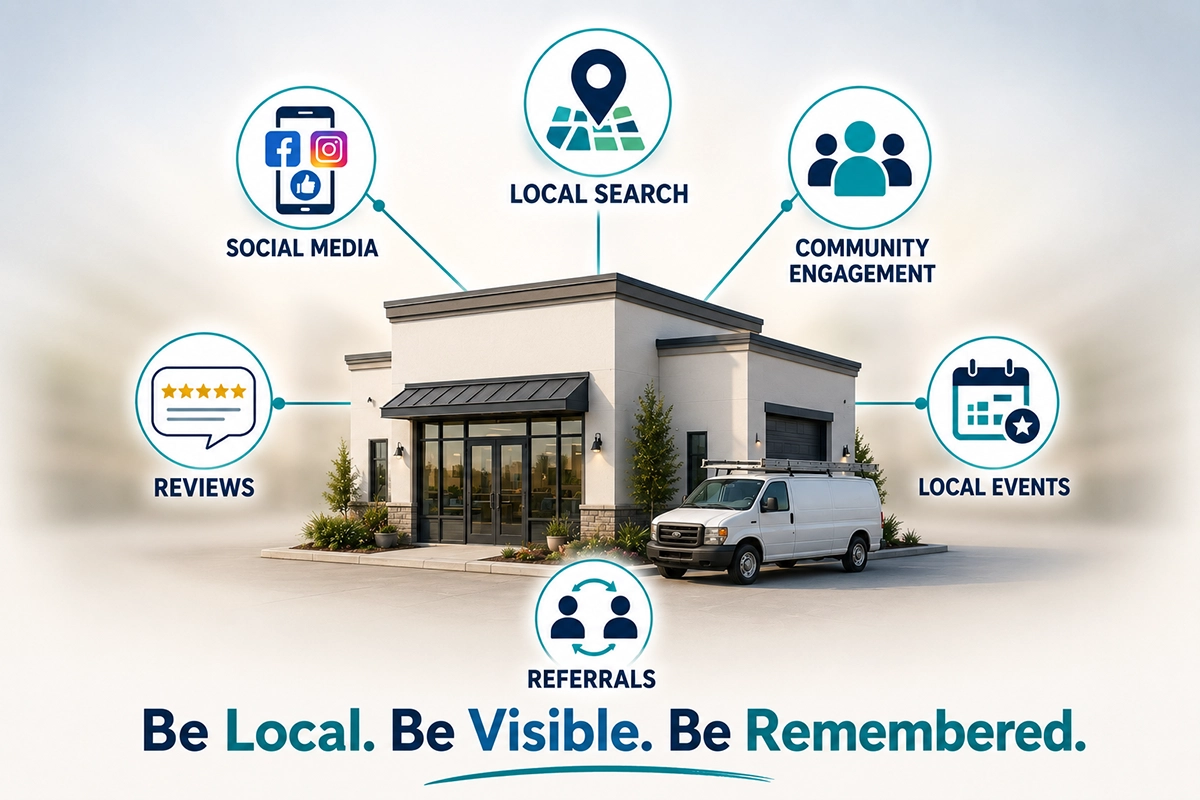
Small businesses don’t need big budgets to compete. They need smart strategies.
Large companies may have greater resources, larger teams, and bigger advertising budgets, but small businesses have an advantage that’s difficult for national brands to duplicate: a genuine connection to the local community.
You know the area. You understand your customers. You can build personal relationships, respond quickly, participate in local events, and become a recognizable part of the community you serve.
That’s what makes local marketing such a powerful tool.
When small business owners focus their marketing efforts on the people most likely to become customers, even a modest marketing budget can produce meaningful results.
The goal isn’t to reach everyone.
It’s to become highly visible, trusted, and relevant to the right people in the right geographic area.
What Is Local Marketing?
Local marketing is a strategy designed to promote a business to consumers within a specific geographic area.
That area could be:
- A neighborhood
- A city
- Several nearby communities
- A county
- A defined service area
- A radius surrounding a business location
Unlike broad advertising intended to reach a large market, local marketing concentrates resources on the people most likely to visit, call, schedule, or purchase from your business.
For a restaurant, plumber, retailer, dentist, contractor, salon, or other locally focused company, reaching 10,000 relevant local consumers may be far more valuable than reaching 100,000 people scattered across the country.
Why Local Marketing Gives Small Businesses a Competitive Edge
Unlike large corporations, local businesses can develop relationships with customers on a personal level.
You may know your customers by name. Your employees may live in the same neighborhoods. Your company may sponsor local organizations, attend community events, or partner with other businesses nearby.
These connections create familiarity.
And familiarity builds trust.
Customers often like doing business with companies they recognize and believe are invested in their community.
That gives small businesses a competitive edge that isn’t based solely on price.
The challenge is making sure potential customers know you’re there.
Start by Understanding Your Local Customers
Before deciding how to promote your business, understand the people you’re trying to reach.
Your target audience isn’t simply “everyone who lives nearby.”
Consider:
- Where do your target customers live?
- What are their unique needs?
- What products or services matter most to them?
- Which social media platforms do they use?
- How do they search for local businesses?
- What influences their purchasing decisions?
- What problems are they trying to solve?
- Which promotions motivate them?
- Are you trying to reach families, homeowners, businesses, retirees, or younger demographics?
The more clearly you understand your local customers, the easier it becomes to choose relevant marketing strategies.
Build a Strong Local Presence on Google
For many businesses, local marketing begins with Google.
When consumers search for services nearby, they often see Google Maps and local business listings before traditional website search results.
A complete and active Google Business Profile can help your company appear when people search for your type of business in the local area.
Make sure your profile includes:
- Correct business name
- Address or service area
- Phone number
- Website
- Business hours
- Appropriate categories
- Services
- Photos
- Regular updates
Businesses should also monitor and respond to customer reviews.
Positive testimonials help potential customers feel more confident about choosing your company. Thoughtful responses also demonstrate that you value customer feedback.
Don’t ignore negative reviews. A professional response can show prospective customers that your business listens, takes concerns seriously, and works to resolve problems.
Use Local SEO to Get Found
Local SEO, or local search engine optimization, helps your business become more visible when people search online for products or services in your area.
For example, someone might search:
- “Plumber near me”
- “Marketing agency in Ocala”
- “Roofing company nearby”
- “Best HVAC company in town”
Search engines use several factors to determine which businesses appear in local search results.
Local SEO strategies may include:
- Optimizing your Google Business Profile
- Using relevant local keywords
- Creating location-specific website content
- Maintaining consistent business information online
- Earning customer reviews
- Creating high-quality content
- Building relevant local links
Strong local search visibility puts your business in front of potential customers at the moment they’re actively looking for what you provide.
Utilize Geo-Targeted Ads
Digital advertising doesn’t have to mean paying to reach people everywhere.
Businesses can utilize geo-targeted ads to show advertising only to people within selected locations.
Geo-targeted ads may focus on:
ZIP codes
- Cities
- Counties
- Neighborhoods
- A radius around your location
- Specific service areas
This can make paid advertising much more cost effective.
Instead of wasting part of your marketing budget on consumers who live too far away to become customers, you’re concentrating your investment on the people you can realistically serve.
Businesses can use geo-targeted ads through Google, Facebook, and other digital platforms.
The more carefully you define your audience and geography, the more efficiently your advertising dollars can work.
Develop a Local Social Media Strategy
Social media marketing gives local businesses an opportunity to show personality and remain visible between purchases.
Your social media strategy doesn’t need to consist entirely of sales messages.
In fact, some of the most effective social media posts are those that show the people and community behind the business.
Consider sharing:
- Behind-the-scenes photos
- Employee spotlights
- Customer testimonials
- Completed projects
- Community involvement
- Helpful tips
- Local events
- Frequently asked questions
- New products or services
- Seasonal information
Social media can also help you reach new customers through paid promotions and sharing.
Choose the social media channels that fit your audience rather than trying to maintain a business account on every available platform.
Facebook may be highly relevant for one business, while other social platforms may be more useful for reaching younger demographics.
Consistency matters more than being everywhere.
Create Valuable Local Content
High-quality content can establish expertise while improving online visibility.
Instead of creating generic information that could apply anywhere, look for opportunities to make your content locally relevant.
A home-service company might write about:
- Weather conditions affecting local homes
- Seasonal maintenance for the region
- Local building considerations
- Common problems in area homes
A restaurant could highlight local ingredients, community events, or neighborhood history.
A marketing company might discuss trends affecting businesses in its local market.
Creating valuable content helps establish thought leadership while giving search engines more information about where your business operates and whom you serve.
Get Involved in Local Events
Sometimes the best local marketing happens away from a screen.
Community engagement puts a face behind your business.
Opportunities might include:
- Festivals
- School events
- Charity fundraisers
- Business expos
- Chamber events
- Local sports
- Community celebrations
- Educational workshops
Participation doesn’t always require a large financial investment.
Your company might sponsor a small activity, donate a service, provide volunteers, host a booth, or simply participate.
Local events help businesses meet customers face-to-face and create the kind of personal connections large national competitors often struggle to reproduce.
Partner With Complementary Businesses
Other local companies don’t always have to be competitors. Some can become valuable partners.
Look for complementary businesses that serve a similar customer base without offering the same services.
For example:
- A realtor could partner with a moving company.
- A wedding venue could partner with photographers and caterers.
- A gym could partner with a physical therapy practice.
- A roofing company could partner with a gutter installer.
Potential partners can cross-promote services, share content, create joint promotions, host events, or exchange referrals.
A good partnership gives both businesses access to a relevant audience while providing additional value to customers.
Create a Referral Program
Your happiest customers may be one of your best marketing resources.
A structured referral program encourages loyal customers to recommend your business to friends, relatives, coworkers, or neighbors.
Offering incentives can help, but rewards don’t have to be expensive.
Depending on the business, incentives might include:
- Account credits
- Discounts
- Gift cards
- Free upgrades
- Loyalty points
- Small thank-you gifts
Most importantly, make the referral process simple.
Customers are more likely to recommend a company when they’ve received exceptional service and know exactly how to make the referral.
Use Email Marketing to Stay Connected
Email marketing is another cost-effective way to maintain relationships with your customer base.
Email campaigns can be used to:
- Share helpful information
- Announce promotions
- Introduce new services
- Promote local events
- Send seasonal reminders
- Request reviews
- Reward loyal customers
Email also allows businesses to stay visible after the initial purchase.
Customer engagement shouldn’t stop once a sale is complete. Staying connected increases the likelihood that customers will return or recommend the business to others.
Don't Overlook Direct Mail
Digital tools are valuable, but traditional marketing can still play an important role locally.
Direct mail can be highly targeted by neighborhood, ZIP code, or household characteristics.
Postcards and mailers may work especially well for:
- Grand openings
- Seasonal promotions
- Home services
- Retail offers
- Community events
- New locations
- Special services
Direct mail can also complement digital marketing.
A customer may receive a postcard, recognize the business later on social media, then search Google when they’re finally ready to buy.
Multiple touchpoints help build awareness.
Drive Foot Traffic With Promotions and Signage
For businesses with physical locations, local marketing should make it easy for people nearby to notice and visit you.
Good exterior signage helps customers identify your location and understand what you offer.
Temporary signs can also support:
- Sales
- New products
- Special events
- Limited-time promotions
Promotions can significantly increase interest when they’re relevant and easy to understand.
But avoid relying on constant discounts.
The objective should be to attract customers and introduce them to the value of your business – not train them to purchase only when prices are reduced.
Build Relationships, Not Just Transactions
The greatest advantage local businesses have is their ability to create meaningful customer relationships.
Remembering a customer’s name, supporting a local cause, solving a problem quickly, or simply providing exceptional service can have more impact than another advertisement.
Those experiences can turn new customers into loyal customers—and loyal customers into advocates.
Your local presence is built through every interaction people have with your business, both online and offline.
Track Your Local Marketing Results
Even community-focused marketing should be measured.
Use available digital tools and customer information to track metrics such as:
- Website traffic
- Phone calls
- Direction requests
- Form submissions
- New customers
- Social media engagement
- Email open rates
- Click-through rates
- Referral activity
- Coupon or promotion redemptions
- Sales
Ask new customers how they heard about you.
Track which promotions generate responses.
Review social media and website data.
Measure results over time.
These insights help small business owners determine which marketing efforts deserve more investment and which strategies need adjustment.
Local Marketing Doesn't Require a Huge Budget
One of the biggest misconceptions about marketing is that competing requires spending as much as larger companies.
It doesn’t.
A limited marketing budget can still support effective strategies such as:
- Local SEO
- Google Business Profile optimization
- Social media
- Email marketing
- Referral programs
- Community engagement
- Business partnerships
- Customer reviews
- Useful website content
What matters is focus.
Small businesses often have fewer resources, so those resources need to be directed toward the channels and activities most likely to reach target customers.
Consistency Turns Visibility Into Familiarity
One local advertisement or social media post isn’t enough to build lasting awareness.
Customers need to encounter your business repeatedly.
They might first notice your company at a local event, later see a Facebook post, read a customer testimonial, receive a mailer, and eventually find your website through a Google search.
Each interaction reinforces the others.
Over time:
- Visibility creates familiarity.
- Familiarity builds trust.
- Trust helps create customers.
- Great experiences create loyalty.
Consistency is how local marketing becomes a long-term growth strategy.
Focus on the Market That Matters Most
You don’t have to be the biggest company in your industry to compete successfully.
You need to be relevant to the people you’re trying to serve.
Build relationships. Be visible in your community. Understand your customers’ unique needs. Maintain a strong local search presence. Use your marketing budget carefully. Partner with other businesses. Provide exceptional service. And stay consistent.
Large corporations may have bigger budgets.
But they don’t necessarily have stronger relationships with your community.
That’s an advantage worth using.
Strengthen Your Local Marketing with ELC Designs Group
At ELC Designs Group, we help small businesses build marketing strategies designed around the customers and communities they serve.
From Local SEO, Google Business Profile optimization, website content, social media marketing, and email campaigns to direct mail, advertising, branding, and promotional materials, we can help you create a consistent local presence that attracts customers and supports long-term growth.
Focus on your local market—it may be your biggest opportunity.
Book a Free Discovery Call to learn more